
Step into the world of modern art deco interior design, where elegance meets sophistication in a harmonious blend of colors, materials, and iconic furniture pieces. Discover the origins, key characteristics, and design principles that define this timeless aesthetic.
Delve deeper into the color palette, materials, and spatial layout considerations that play a pivotal role in creating stunning art deco interiors. Explore how lighting design elevates the glamour and luxury of these spaces, culminating in a design style that is both functional and visually captivating.
Overview of Modern Art Deco Interior Design
Modern Art Deco Interior Design is a style that combines the elegance and glamour of traditional Art Deco design with a contemporary twist. It focuses on bold geometric shapes, rich colors, and luxurious materials to create a sophisticated and stylish space.
Key Characteristics of Modern Art Deco Interior Design
- Geometric Shapes: Modern Art Deco interiors often feature geometric patterns and shapes such as chevron, zigzags, and sunbursts.
- Luxurious Materials: This style incorporates luxurious materials like marble, brass, velvet, and lacquer to add a touch of opulence.
- Bold Colors: Vibrant colors such as emerald green, sapphire blue, and rich gold are commonly used in Modern Art Deco interiors to create a sense of drama.
- Art Deco Furniture: Furniture pieces in this style are often characterized by sleek lines, mirrored surfaces, and intricate detailing.
- Statement Lighting: Modern Art Deco interiors feature dramatic lighting fixtures that serve as focal points in the room.
Origins and History of Art Deco Design
Art Deco design originated in the 1920s and 1930s, a time of rapid industrialization and technological advancement. It was influenced by various art movements such as Cubism, Bauhaus, and Futurism, as well as by the exotic styles of Ancient Egypt and Africa.
Color Palette and Materials
In modern art deco interior design, the color palette is characterized by bold and luxurious hues that create a sense of glamour and sophistication.
Color Palette
- Black and white: These classic colors are often used as a base in art deco interiors, providing a timeless and elegant backdrop for the design.
- Jewel tones: Rich colors such as emerald green, sapphire blue, and ruby red are commonly incorporated to add a touch of luxury and opulence.
- Metallic accents: Gold, silver, and bronze are frequently used to bring a sense of glamour and shine to the space.
Materials and Finishes
- High-gloss finishes: Lacquered surfaces and shiny materials like chrome and glass are commonly used to create a sleek and polished look.
- Geometric patterns: Art deco interiors often feature geometric shapes and patterns in materials like marble, brass, and mirrored surfaces to add visual interest.
- Velvet and silk: Luxurious fabrics such as velvet and silk are used for upholstery and drapery to enhance the tactile experience and add a sense of luxury.
Furniture and Decor Elements
In modern art deco interior design, furniture and decor elements play a crucial role in capturing the essence of the style. Iconic furniture pieces, geometric shapes and patterns, as well as symmetry and balance, are key elements that define art deco interiors.
Iconic Furniture Pieces
In modern art deco interior design, iconic furniture pieces such as mirrored coffee tables, sleek leather sofas, geometrically shaped chairs, and luxurious velvet ottomans are commonly used. These pieces often feature bold, angular designs, rich materials, and metallic finishes that exude luxury and sophistication.
Incorporation of Geometric Shapes and Patterns
Geometric shapes and patterns are a hallmark of art deco decor. In modern art deco interiors, you will often find geometric motifs such as chevron, zigzags, and sunburst patterns incorporated into furniture, rugs, wallpapers, and artwork. These patterns add a sense of dynamism and visual interest to the space, creating a harmonious blend of modernity and classic elegance.
Importance of Symmetry and Balance
Symmetry and balance are essential principles in art deco interiors. Furniture placement, lighting fixtures, and decorative elements are carefully arranged to create a sense of equilibrium and harmony in the space. The use of mirrored surfaces and repetitive geometric patterns further enhance the symmetry, adding a sense of order and sophistication to the overall design.
Lighting Design
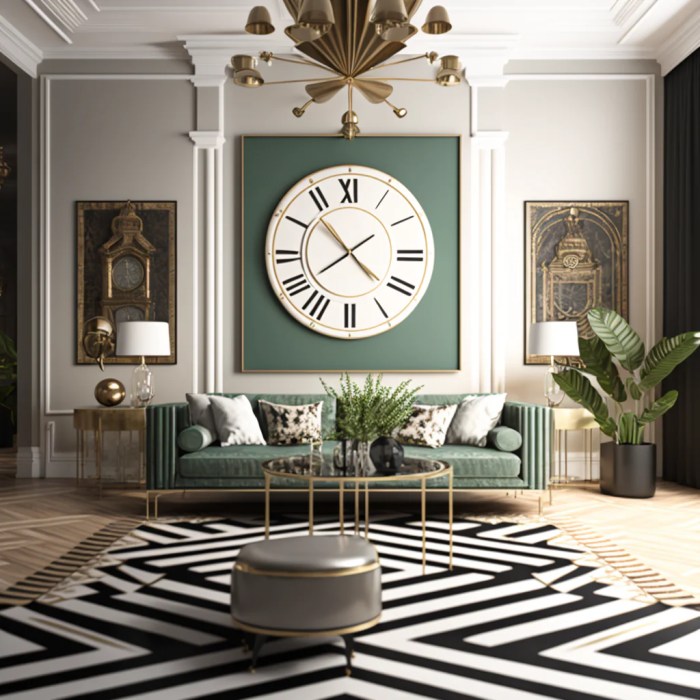
Lighting plays a crucial role in enhancing the art deco style, creating a glamorous and luxurious ambiance in modern interior spaces.
Types of Lighting Fixtures
- Chandeliers: Ornate and often geometric in design, chandeliers are a popular choice for art deco interiors, adding a touch of elegance and sophistication.
- Wall Sconces: These fixtures provide ambient lighting while also serving as decorative elements on walls, contributing to the overall art deco aesthetic.
- Table Lamps: With sleek lines and metallic finishes, table lamps are commonly used in art deco interiors to illuminate specific areas and add a touch of style.
Creating Glamour with Lighting
Lighting in art deco interiors is strategically placed to highlight architectural details, luxurious materials, and rich color palettes. By incorporating a mix of ambient, task, and accent lighting, designers can create a sophisticated and glamorous atmosphere that evokes the opulence of the art deco era.
Spatial Layout and Design Principles
In modern art deco interior design, spatial layout plays a crucial role in creating a cohesive and visually appealing space. Design principles such as repetition, contrast, and unity are key elements that are applied to achieve a harmonious balance between functionality and aesthetics.
Spatial Layout Considerations
When designing a modern art deco interior, spatial layout considerations focus on optimizing the use of space while maintaining a sense of luxury and elegance. Rooms are often designed with a symmetrical layout to create a sense of balance and harmony.
High ceilings, geometric shapes, and bold patterns are commonly used to enhance the overall aesthetic.
Design Principles in Art Deco Interiors
- Repetition: The use of repeated patterns, shapes, and motifs throughout the space creates a sense of rhythm and continuity in art deco interiors.
- Contrast: Bold contrasts between light and dark colors, smooth and textured surfaces, and geometric and organic shapes add drama and visual interest to the design.
- Unity: Despite the use of contrasting elements, art deco interiors maintain a sense of unity through cohesive color schemes, materials, and design motifs.
Functionality vs Aesthetics
In modern art deco interior design, there is a delicate balance between functionality and aesthetics. While the design prioritizes visual appeal and luxurious elements, practicality and comfort are also important considerations. Furniture pieces are often both stylish and functional, with sleek lines and luxurious materials that serve a purpose while enhancing the overall aesthetic of the space.
Concluding Remarks
In conclusion, modern art deco interior design offers a unique fusion of past and present, creating spaces that exude opulence and style. Embrace the symmetrical lines, geometric patterns, and luxurious finishes to elevate your living spaces to a new level of sophistication.
Questions and Answers
What defines modern art deco interior design?
Modern art deco interior design combines elements of luxury, glamour, and geometric patterns to create visually striking and sophisticated living spaces.
How do color and materials contribute to the art deco aesthetic?
The typical color palette of rich jewel tones and materials like lacquer, chrome, and glass play a crucial role in achieving the opulent art deco look.
What are some iconic furniture pieces in modern art deco design?
Furniture pieces like velvet sofas, mirrored coffee tables, and sleek geometric chairs are often featured in art deco interiors.
Why is lighting design important in art deco spaces?
Lighting fixtures such as chandeliers and sconces enhance the glamour and luxurious ambiance of art deco interiors, creating a visually stunning effect.
How does art deco design balance functionality and aesthetics?
Art deco design principles focus on achieving a harmonious balance between functionality and aesthetics, ensuring that spaces are both visually appealing and practical.